

Bruegel on exit chasing and unbridled ambition.
Originally published on LinkedIn in early March 2026.
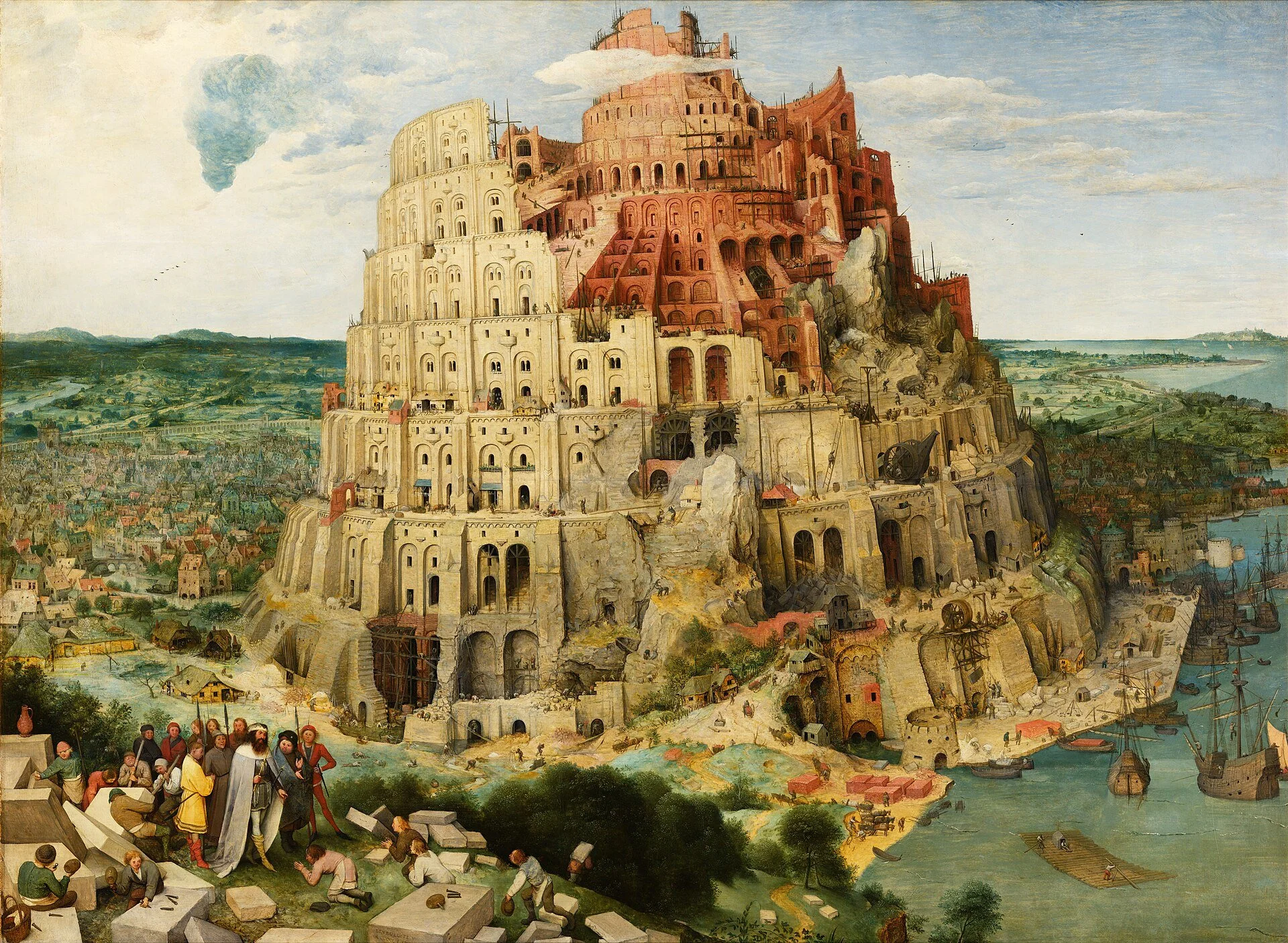
The tower of Babel by Pieter Brueghel the Elder, Public Domain
Like all the great myths and stories, the Tower of Babel is a layered one.
At first, I planned to write about the difficulties that come with scaling a business from a tight founding team to a sizeable enterprise. New hires join, departments form, and one day you look around and realise that progress is slowing. Miscommunication creeps in. Sales is fighting with Product and Strategy becomes hazy. The glue that once held everything together has quietly dissolved. Nobody intended it. It just happened.
But something didn't sit well with that interpretation. I longed to dig deeper. So I went back to the story itself, and the why. Why on earth would God intervene in something people were building together? In an attempt to reach the heavens, no less?
The answer is in the intention behind it. "Let us build a tower that reaches the heavens, so that we may make a name for ourselves," the Bible says. Not to serve something larger. Not to solve a problem worth solving. To make a name for themselves. Pure, unbridled ambition—pointed inward.
God's response isn't destruction. He doesn't tear the tower down, but scrambles the language so people no longer understand each other. Building the tower was never the problem, the intention underlying it was.
Think about how many companies we've watched do this. The explosive burn rates, the endless unicorns and '30 under 30s', the exorbitant valuations—completely detached from reality, while the higher mission that once united them collapsed. The culture became so driven by growth, by winning, by making a name that the soul of the company dissolved while the tower kept rising.
This is what unbridled ambition does. Not dramatically, but gradually. It erodes the thing more vital than the product, valuation or exit—the shared sense of what we are building this for, and why it matters.
And there's the paradox of it all: the scrambling of language forces the builders back to something real. They need to learn how to talk to each other again and find genuine common ground if they want to build something that is elevated rather than self-serving. It is only then, that you might actually reach the heavens.
And so the thing that looked like punishment was actually the correction. The fragmentation became the medicine. God's point wasn't that they stop building. It was that they stop building that.
Is your ambition serving the mission, or has the mission started serving ambition?
Laurie writes weekly reflections on leadership and business building—with insights drawn from art, myth, and literature. Follow her or FABRIC for more.
💌 Title: Bruegel on exit chasing and unbridled ambition.
🎭 Inspiration: The Tower of Babel (1563) by Pieter Bruegel
🎨 Photo: Public domain, via Kunsthistorisches Museum, Vienna