This article was originally published on LinkedIn.
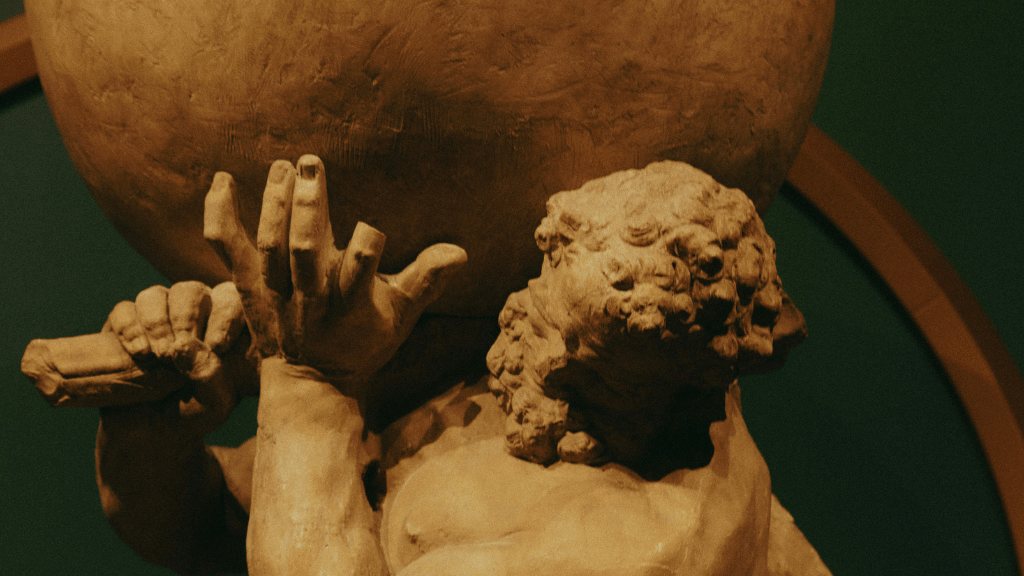
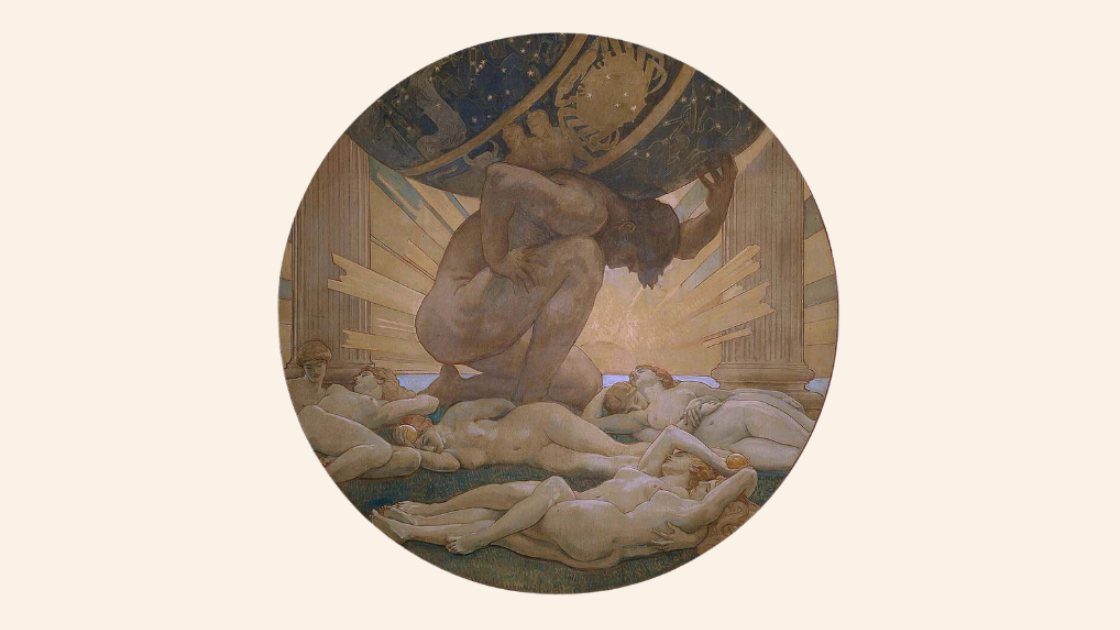
I used to walk past the Royal Palace on Dam Square nearly every day. Still, it took me a while to really see him: Atlas, towering over the heart of Amsterdam. Head bowed, back curved, somewhere between strength and collapse. He seems to carry the earth. In Greek myth, he was condemned to carry the sky.
Atlas was a Titan, one of the old gods. His kind had seized power from the gods before them, then lost it to the next generation. By law of nature, every new order one day becomes the old one. Atlas was given the sky to hold, forever.
“Those who tear down the world are the ones who also change it, and often help rebuild it,” writes Norwegian novelist Johan Harstad. A literary way of saying what economist Joseph Schumpeter dubbed “creative destruction” a few decades before. Founders know this better than anyone. Every company begins with a refusal of the world as it is. But what if the new world you built rests on your shoulders, and yours alone?
The myth gives Atlas no way out. In Ovid’s telling, a stranger asks him for shelter, and Atlas, afraid of losing what he guards, drives him away. The stranger is Perseus. Outmatched by the giant, he holds up Medusa’s head, and Atlas turns to stone: the Atlas Mountains, with the sky resting on him for good. End of tale.
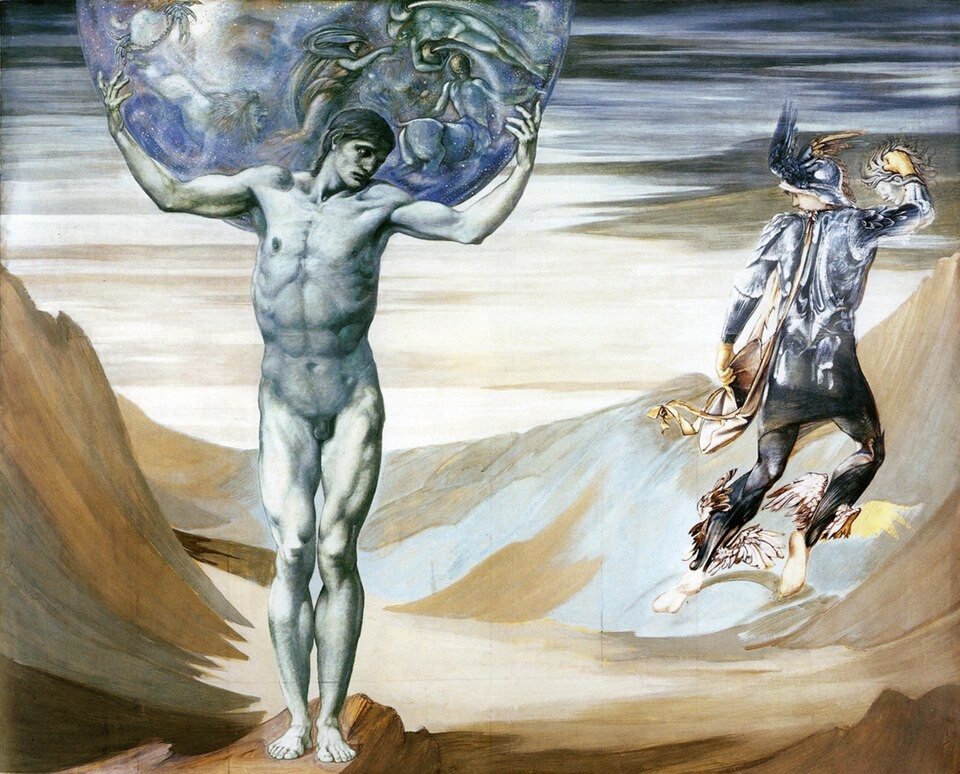
The familiar weight: why we cannot let go
In my experience, when you carry something long enough, part of you starts to wish you could just let it all fall. At the same time, letting go feels impossible. Drop the sky all at once and the world collapses—and you with it. Like the dog refusing to leave its cage when the door is finally open, the weight you know feels safer than what you don’t.
It reminded me of the founders and leaders we work with, who built something from zero to one and held it together while it grew far beyond them. Can you imagine holding up the sky by yourself, for years? Only for others to keep telling you to put it down, to growing mutual frustration?
What if Atlas had let Perseus in?
Atlas carried more than the sky. He also owned an orchard of golden apples: gold that never tarnishes, on fruit meant to be eaten. And he had been warned. A son of Zeus would one day come, and take not only the apples, but the glory. Atlas had lost his place to the next generation once before. So he walled off his orchard and kept everyone out.
This is a fear I see at the heart of many founder transitions: losing your place in what you built. Every new leader at the gate, the COO, the new MT member, the successor, can start to look like that son of Zeus. So the gate stays shut.
Through a depth-psychology lens, the orchard holds something more personal still. Some of us learn early that we are valued for what we carry, more than for who we are. Over time the weight becomes an identity: the more you can bear, the more you are worth. The most frightening thought is then not that someone will steal your apples. It is that someone else could carry the sky. And if they can, who are you?
So the gold stays behind the wall. What a wall protects, it also locks away. The curiosity that made you start, back when you could lose a whole afternoon to a single problem. The playfulness that disappeared somewhere between your Series A and your third reorganisation. Some even trace it back to their childhood and the part of them they learned to hide, as they learned their worth lay in what they could carry. The part of them who did not yet have to earn their place through work or responsibility. That self does not disappear; it is walled in.
The guest at the gate
Perseus did not come to steal. He asked for a place to rest. But when he mentioned that Zeus was his father, Atlas could only hear the prophecy. He could no longer tell a guest from a thief. I recognise this moment in many leaders, including myself. Rest is offered, help is offered, and the door stays shut. “I can do it myself. Not now.”
And so Perseus holds up Medusa’s head. In Jungian thought, Medusa is commonly seen as the terrifying face of the unconscious: the fear, the anger, the trauma, the exhaustion we have pushed aside for years. Carry far enough past your limit, and sooner or later you meet her gaze. Until we become like the Atlas Mountains: impressive from a distance, a whole landscape shaped around us, still holding up the sky. Petrified under the weight of what we’re carrying.
A different ending
In the myth, Atlas gets no second chance. But it shows where the turn could have been: at his garden’s gate, long before Medusa’s gaze. The way out is not throwing off the weight. It is letting someone in. Accepting rest before your body forces it on you. And going within, to see what’s hidden in your orchard, rich with golden apples.
The sky Atlas carries is not one solid weight. It is made of countless stars: every decision, every relationship, every responsibility that once landed on your shoulders. Letting go begins with setting down just one. One real decision that is no longer yours, but your team’s. You eat an elephant one bite at a time.
Rather than asking someone to put down the sky, we get curious. What might be a first star? Setting it down takes care, respect for what was built, and room for others to ease the load, until the sky is carried by a larger whole. Every star you set down makes room for others, and for the gifts you walled away. It may even be the first step to finding yourself again.
Do you recognise this, as a founder or as a leader? I’d love to hear about the first star you set down. How did it feel, and what helped?
Laurie writes bi-monthly insights on leadership and business building—drawn from art, myth and literature. Follow her or FABRIC for more.
💌 Title: Atlas and the leader being crushed by what they built.
🎭 Inspiration: Atlas, the Titan sentenced to carry the heavens; Ovid, Metamorphoses.
🎨 Header: Unsplash. Other images credited in their captions.
 Management Team Effectiveness
 Executive Coaching